
Bloody Mary to Gloriana: The Late English Renaissance
The English Renaissance arrived two centuries after Italy's, held back by a century of civil war. Discover why the golden age of Shakespeare came so late.
WOMENS HISTORYMEDIEVALTUDORWALKS
8/25/20256 min read
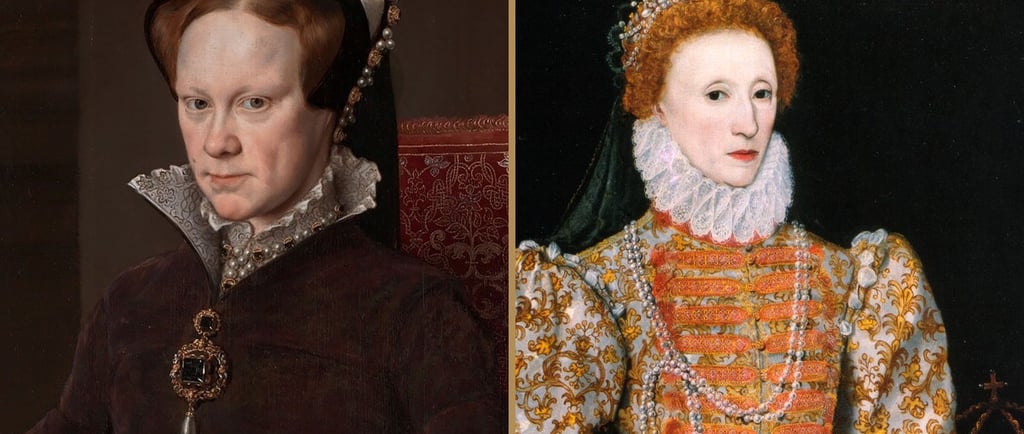
When we picture the Renaissance, we picture Florence and Venice. We do not picture London. And there is a reason for that. The Renaissance was an Italian story first, and everywhere north of the Alps received it second-hand. England, sitting on the commercial edge of Europe rather than at the Mediterranean crossroads, was always going to arrive later than most.
But England was late even by northern European standards. By the time Spenser, Marlowe and Shakespeare were at work, Italy had been celebrating its golden age for the better part of a century. So why did it take so long – and why, when it finally came under Elizabeth, did it arrive alongside an age of exploration that England had left so conspicuously to the Spanish and the Portuguese?
A century of fighting
The decades when Florence and Venice were flowering – roughly the fifteenth century – were the very decades when England was tearing itself apart.
The Hundred Years' War dragged on until 1453. The Wars of the Roses then consumed the country in dynastic bloodletting until Henry VII won at Bosworth in 1485. You cannot sustain patronage, building and scholarship when the aristocracy is busy killing one another and the crown changes hands on the battlefield. Italy had its own wars, but its wealthy city-states kept the money, the workshops and the patronage networks running throughout. England simply did not.
Money, cities and ruins
The Italian Renaissance was paid for by mercantile and banking fortunes, the Medici being the obvious example, in dense competitive self-governing cities that prized public display.
England was more agrarian and stayed feudal for longer. It sat on the periphery of European trade rather than at the point where Byzantine and Islamic learning flowed in. The Italians had something else England lacked entirely – the ruins of Rome underfoot, a tangible classical past to recover and imitate. England's link to antiquity was far more abstract, and harder to build a movement around.
Humanism crosses the Channel
Humanism travelled north slowly. It reached England properly only around 1500, through the Oxford reformers Colet, Grocyn and Linacre, the visits and influence of Erasmus, and the work of their great English product, Thomas More.
Caxton had set up his printing press at Westminster in 1476, which helped the new learning spread once it arrived. But the intellectual scaffolding took two generations to mature, and it was building from a very low base.
The Reformation clears the ground
The event that transformed everything, and complicated it, was the Reformation. Henry VIII's break with Rome in the 1530s and the dissolution of the monasteries redistributed enormous wealth and land, redirected English intellectual energy and tied cultural life closely to the crown and a new Protestant identity.
It was disruptive. It was, for many, destructive. But it cleared the ground for something new to grow.
Mary, the original Renaissance queen
The first ruler to stand on that cleared ground was not Elizabeth. It was her elder sister. History remembers Mary Tudor as "Bloody Mary," but the woman behind the caricature was the first crowned queen to rule England in her own right. Empress Matilda held power for a few months in the twelfth century but was never crowned. Lady Jane Grey was proclaimed for nine days in 1553 and never crowned either. Mary was the first woman to take the throne in her own name, with no precedent for the ceremony, so she borrowed the coronation of kings and made one.
She was every inch a Renaissance princess. At the request of her mother Catherine of Aragon, the Spanish humanist Juan Luis Vives wrote a programme of study for her, "De Ratione Studii Puerilis", in 1523, and was entrusted with directing her education. Mary read Latin, studied Greek, spoke Spanish and French and was an accomplished musician. Her mother was herself a daughter of the dazzling court of Ferdinand and Isabella, so the new learning ran in the family.
The flowering, though, came after her. Mary held the throne for five years and died in 1558, before the poets and the playhouses and the voyages arrived. Someone had to prove a woman could reign at all before there could be a Gloriana, and that someone was the sister history treated least kindly. Mary planted. Elizabeth reaped.
Elizabeth and the age of discovery
By Elizabeth's reign the pieces were finally in place – stability, money, a confident national identity, a literate audience and a printing trade to feed it. The result was the explosion we actually call the English Renaissance, the world of Spenser, Sidney, Marlowe and Shakespeare.
And it came hand in hand with the sea. This was the age of Francis Drake, whose circumnavigation between 1577 and 1580 announced that England could match anyone on the open ocean. It was the age of Walter Raleigh and the first attempts to plant English colonies at Roanoke, of Frobisher probing the Arctic for a north-west passage, and of the privateers who harried Spanish treasure fleets all the way to the defeat of the Armada in 1588.
Yet here too England was a latecomer. Portugal had been inching down the African coast through the whole fifteenth century. Columbus crossed the Atlantic for Spain in 1492. Vasco da Gama reached India in 1498. By 1494 Spain and Portugal had carved the unexplored world between themselves in the Treaty of Tordesillas, while England was still recovering from civil war and had neither the ships, the money nor the royal organisation to compete.
So the reasons the discovery came late are the reasons the Renaissance came late. A country at war with itself does not finance voyages of exploration any more than it finances poets and painters. Both are luxuries of peace and surplus, and England did not have either until the Tudors had been on the throne for two generations.
The long road to a golden age
There is a neat irony in all of this. The same dynasty whose founding violence sat at the tail end of the long delay – Bosworth Field – is the dynasty whose later stability made the flowering possible. Henry VII won the crown in a civil war. His granddaughter presided over Shakespeare and Drake. The distance between those two moments is the distance England had to travel to become a place where a Renaissance could happen at all.
And it ended much as it began, in civil war. There is no single closing date – the English Renaissance is a convention rather than an event – but the most vivid full stop is 1642, when the Civil War broke out and the new Puritan Parliament ordered the London theatres shut. The playhouses that had staged Shakespeare and Marlowe stayed dark for eighteen years, and when Charles II reopened them in 1660 the country had moved into a different age altogether, polished and rule-bound where the Renaissance had been expansive. So the golden age that took two generations of hard-won peace to begin was brought down, in the end, by the same thing that had delayed it for so long. England opened its Renaissance in the aftermath of one civil war and closed it in the middle of another.
Walk Mary's story for yourself
The surest way to step beyond the caricature is to stand where she stood. Beyond Bloody Mary: Discover Mary's Tale is a guided walk from Hidden Tudors Tours that follows Mary I through the heart of royal Westminster – from Westminster Abbey and the Henry VII Lady Chapel to Westminster Hall, the remains of Whitehall Palace and St James's Palace. You will go past the myth to meet England's first crowned queen in her own right.
The walk meets outside the Westminster Abbey Shop, The Sanctuary, London SW1P 3JS, and runs on selected dates.
Book your place on Beyond Bloody Mary →
Frequently asked questions
Why is Mary I called "Bloody Mary"?
Mary I earned the nickname for the religious persecutions of her reign, when more than 280 Protestants were burned at the stake between 1555 and 1558 as she sought to restore Roman Catholicism to England. The label has overshadowed the rest of her story, including her achievement as the first woman to be crowned queen of England in her own right.
Was Mary I the first queen of England?
Mary I was the first crowned queen regnant of England, which means the first woman to rule in her own name rather than as the wife of a king. Empress Matilda held power briefly in the twelfth century but was never crowned, and Lady Jane Grey was proclaimed for nine days in 1553 but never crowned either.
Why did the English Renaissance happen so late?
England came to the Renaissance late because the fifteenth century, when Italy was flowering, was consumed by the Hundred Years' War and the Wars of the Roses. Without peace, wealth or stable patronage there was no foundation for a cultural flowering. The conditions arrived only under the Tudors, and the golden age came in the later sixteenth century under Elizabeth I.
When did the English Renaissance end?
There is no single date, but the most common marker is 1642, in the mid-seventeenth century, when the Civil War broke out and Parliament ordered the London theatres closed. The playhouses stayed shut until 1660, by which time England had moved into the very different neoclassical age of the Restoration.
What education did Mary I have?
Mary received a full Renaissance humanist education. At the request of her mother Catherine of Aragon, the Spanish humanist Juan Luis Vives wrote a study programme for her in 1523 and directed her learning. She read Latin, studied Greek and spoke Spanish and French.
Where can I learn about Mary I in London?
Hidden Tudors Tours runs a guided walk, Beyond Bloody Mary: Discover Mary's Tale, which follows her story through royal Westminster and meets outside the Westminster Abbey Shop, The Sanctuary, London SW1P 3JS. You can book a place here.
Explore
Discover the hidden stories of Britain's Tudors.
Connect
Subscribe to Newsletter
contact@hiddentudorstours.co.uk
+44 (0)203 603 7729
© 2025. All rights reserved.